Building date: About 1830
Original use: Schoolhouse
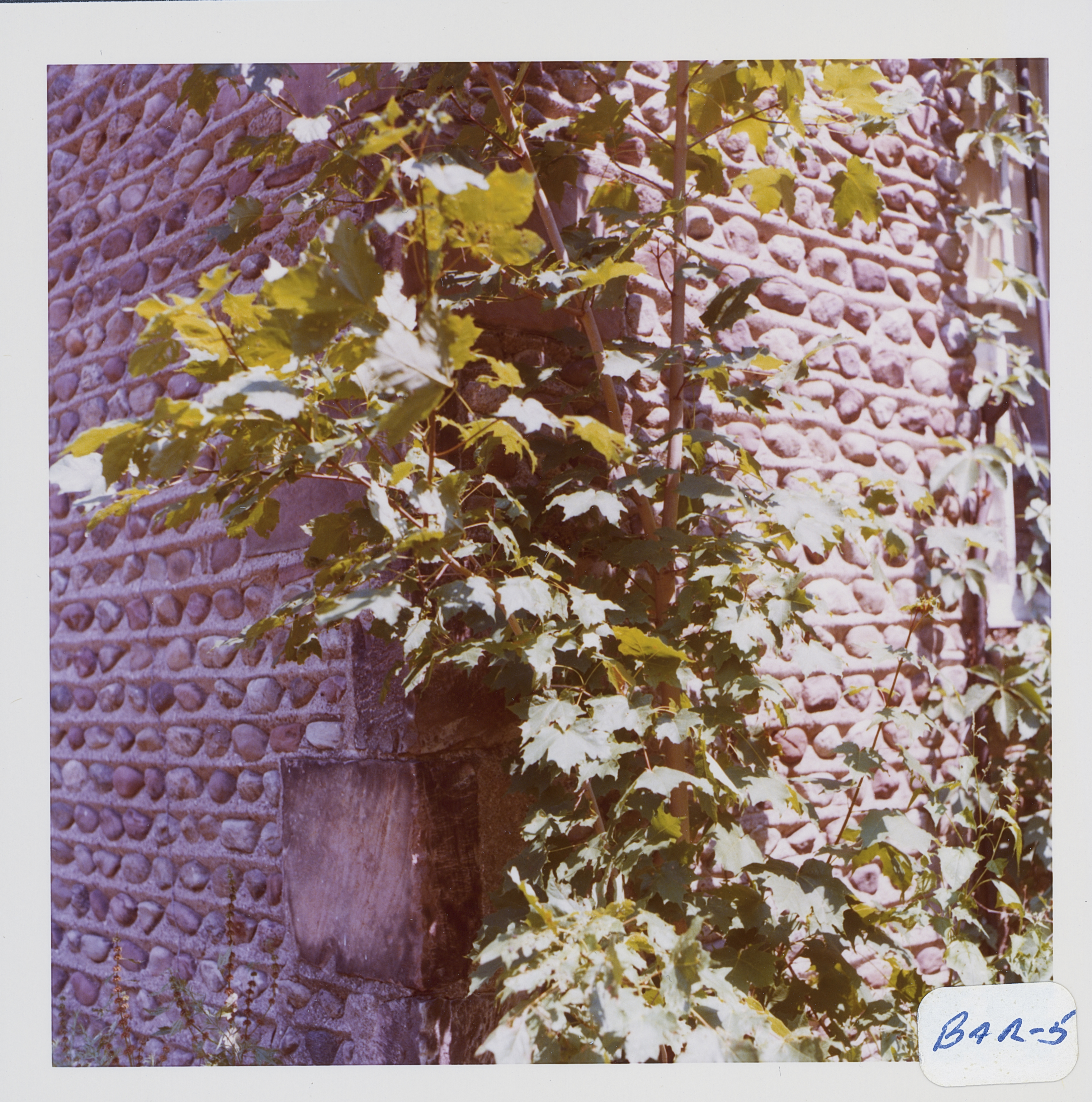
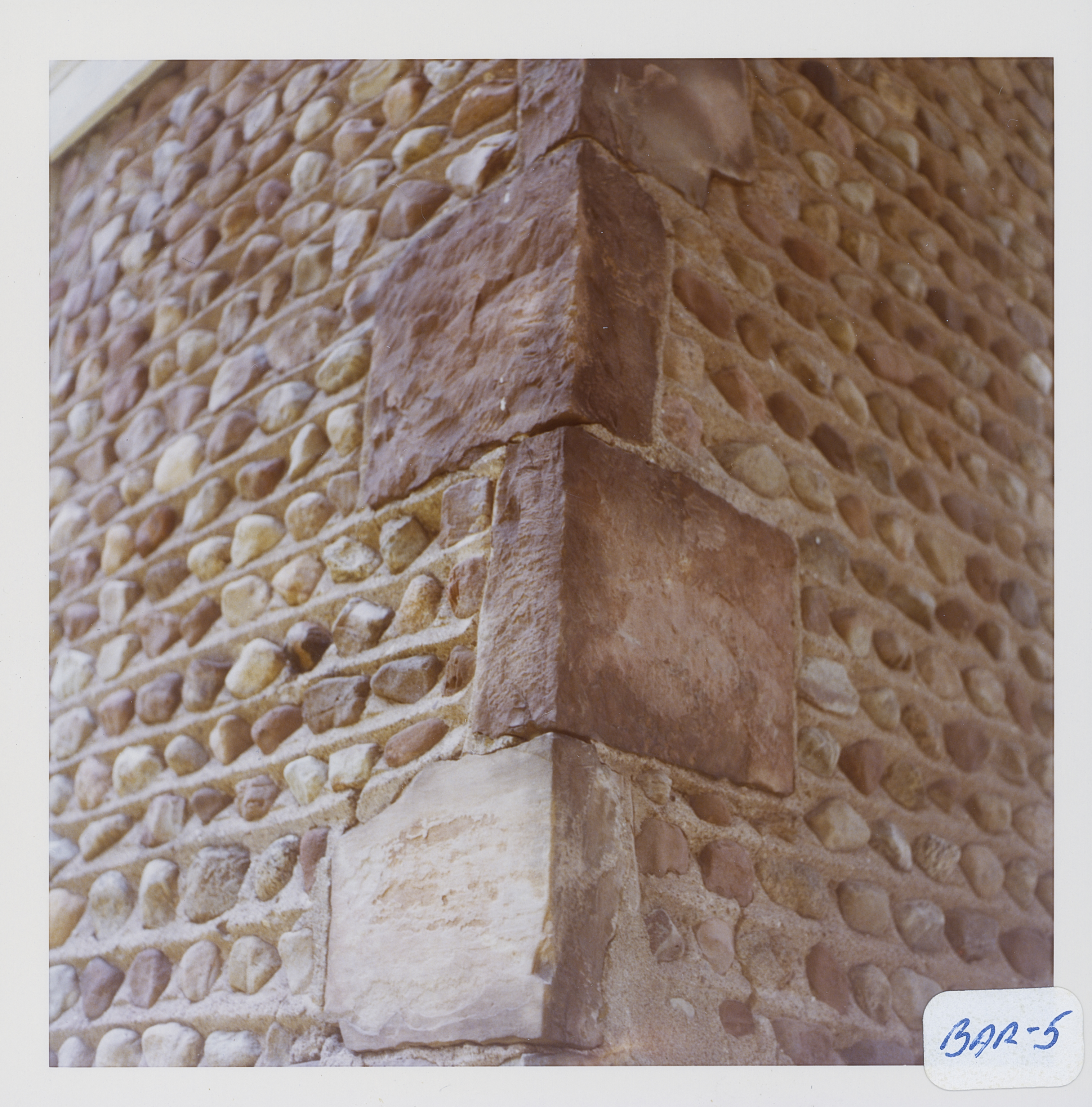
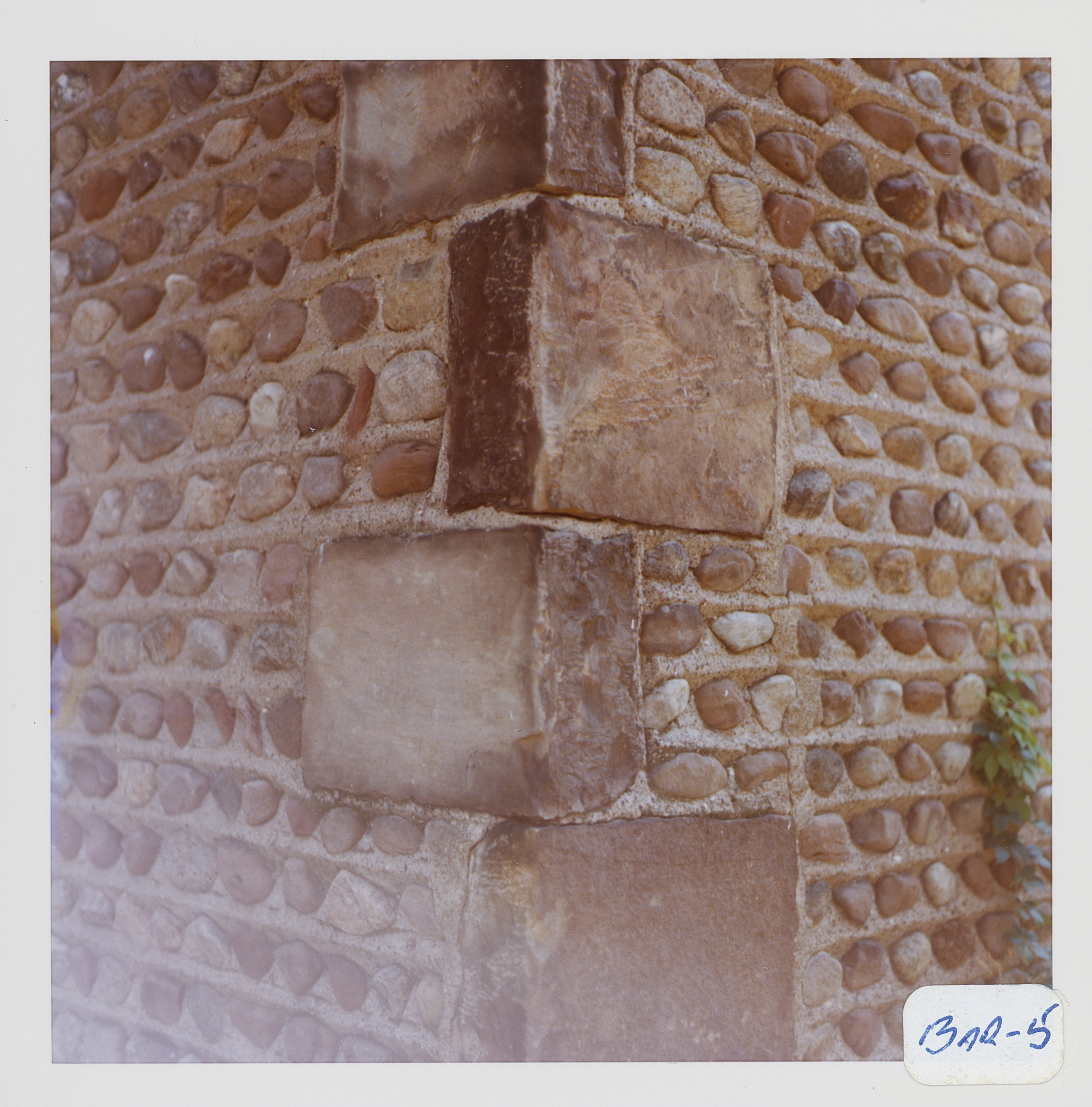
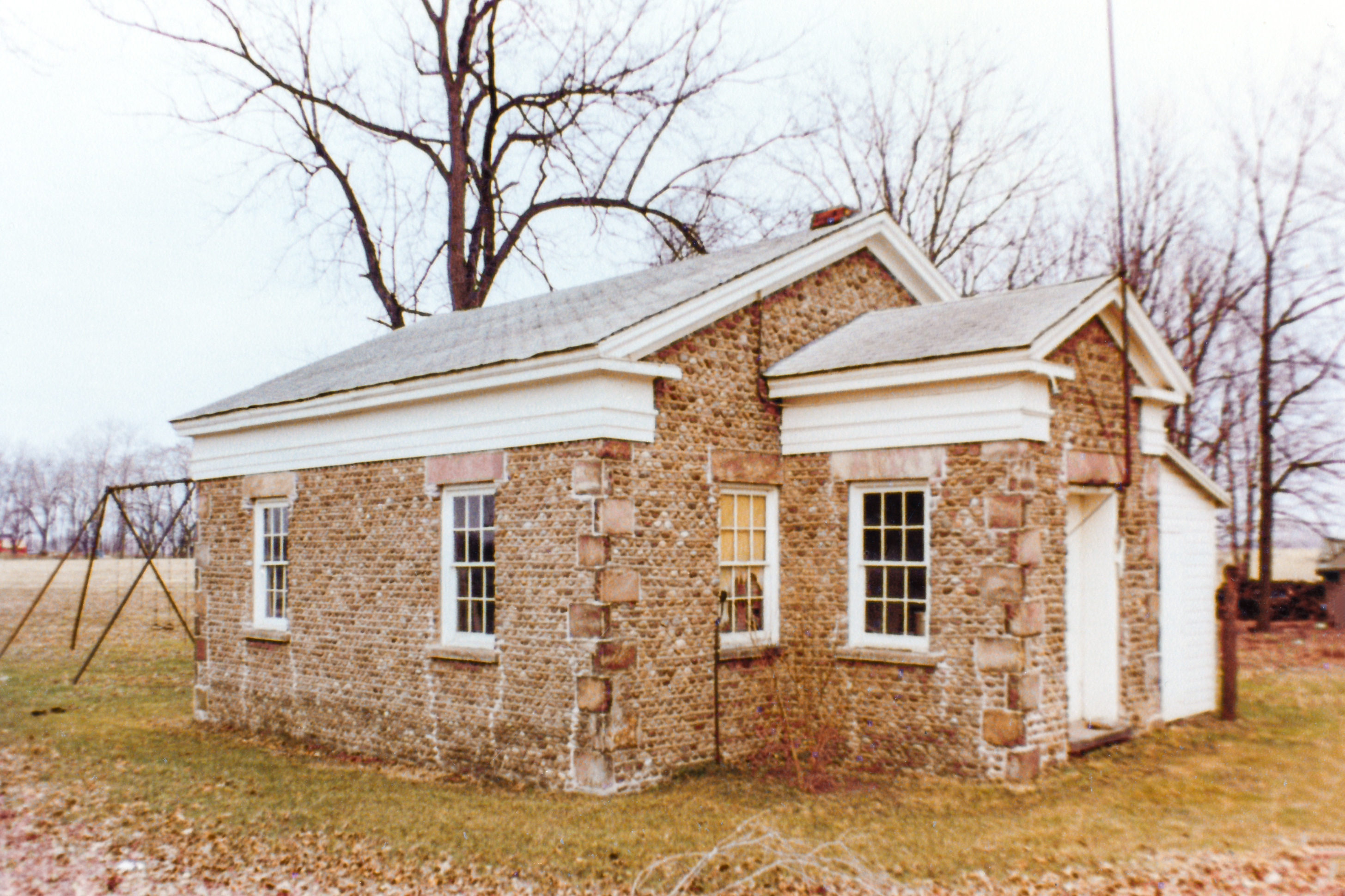
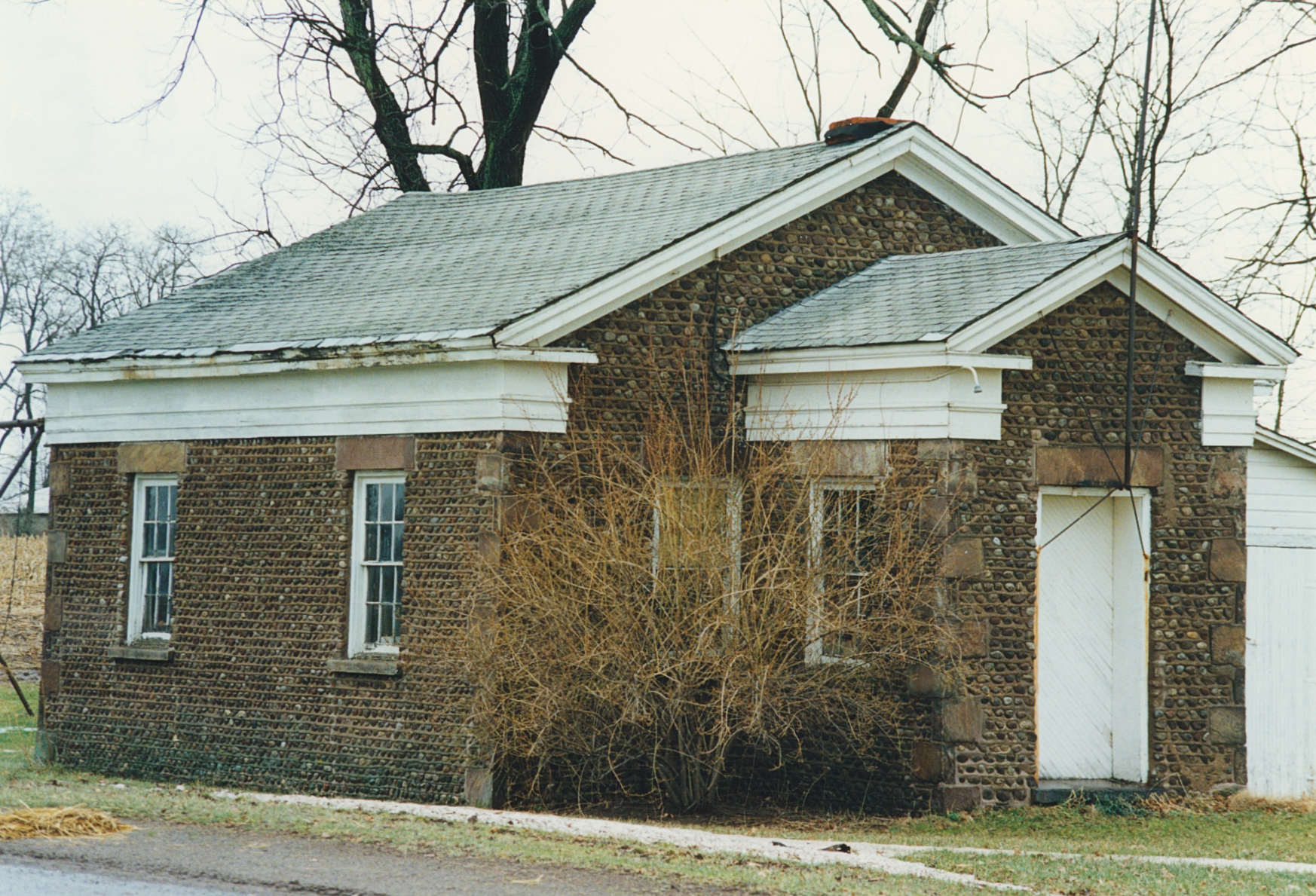
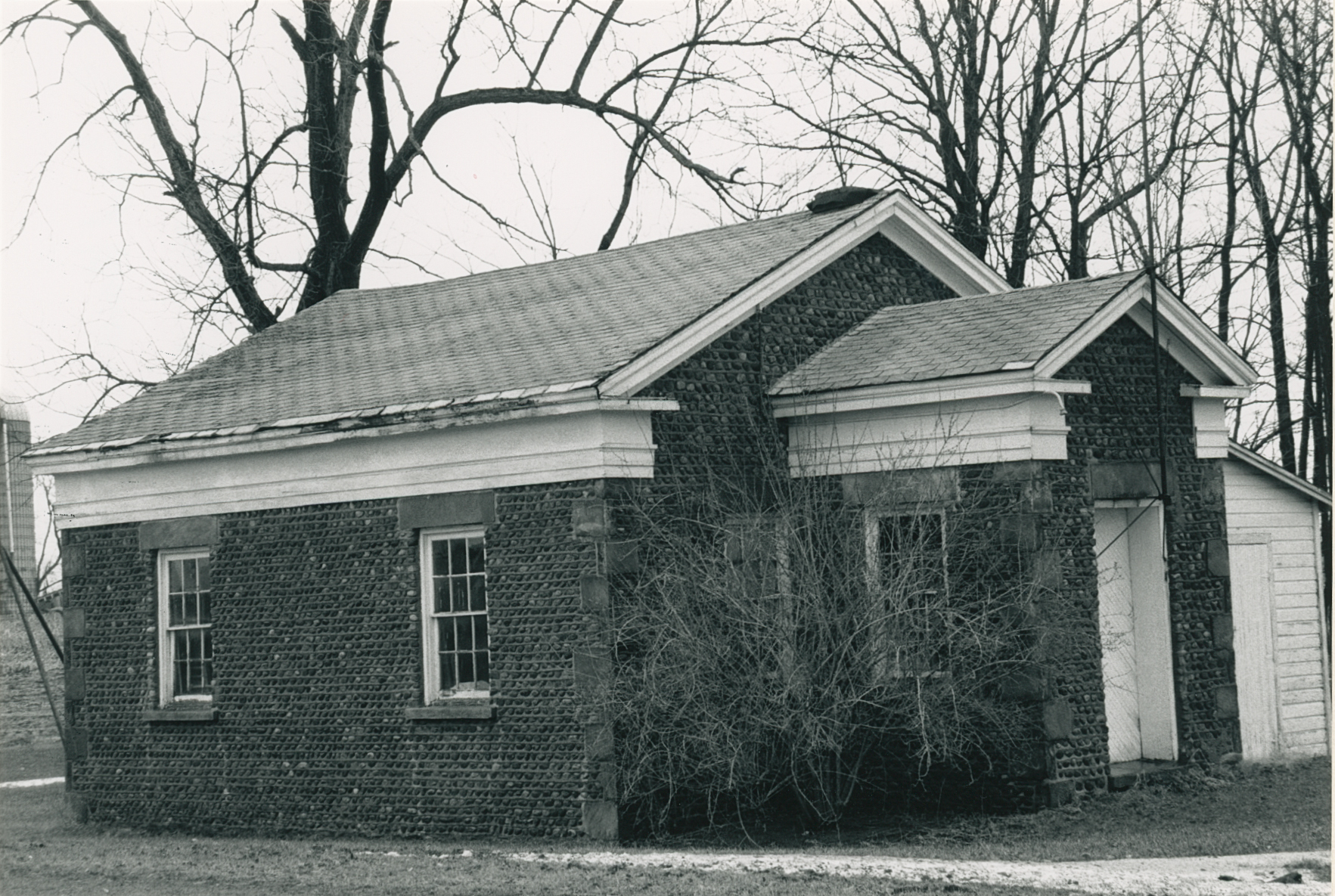
Corner structures: Red sandstone
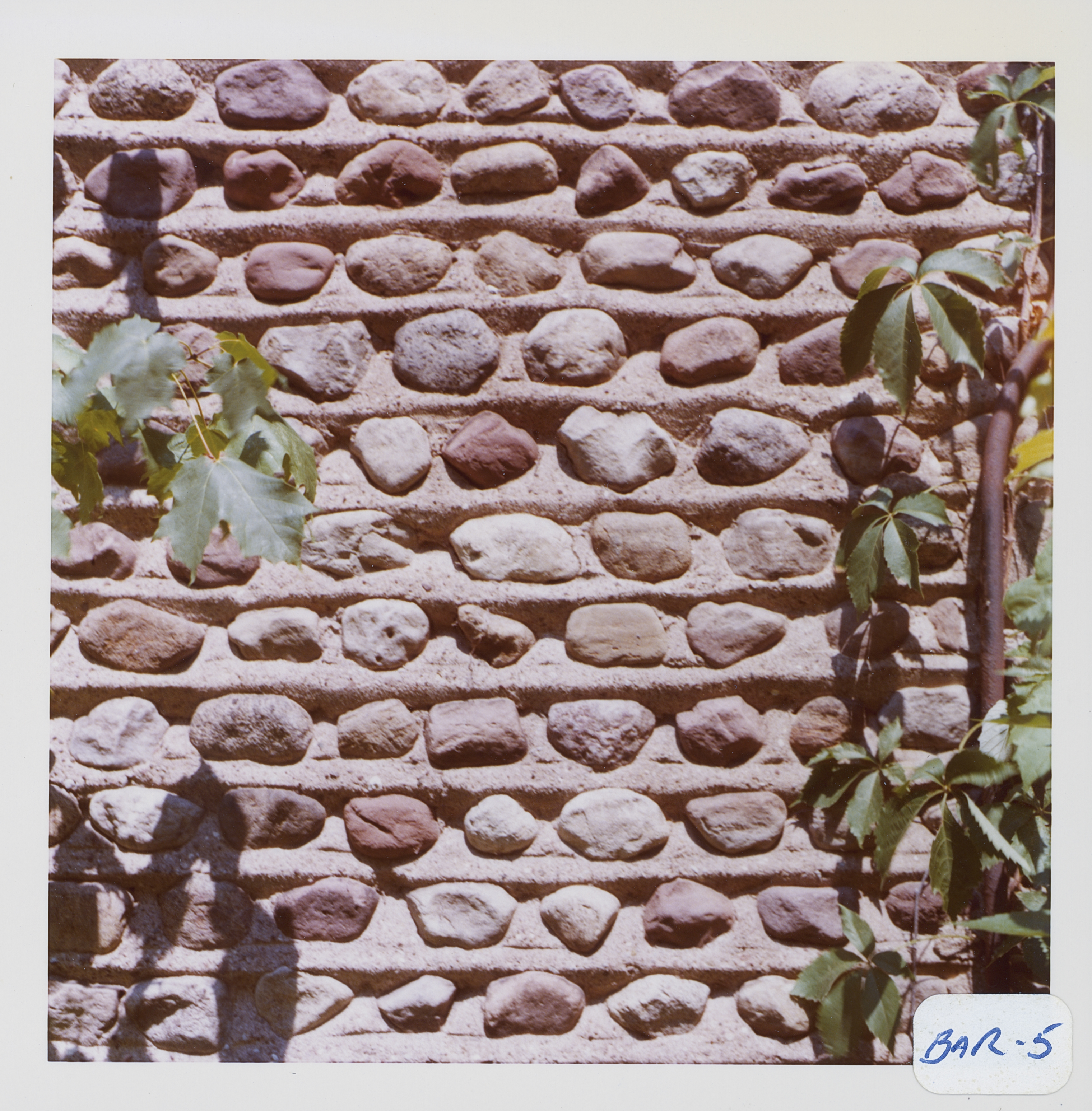
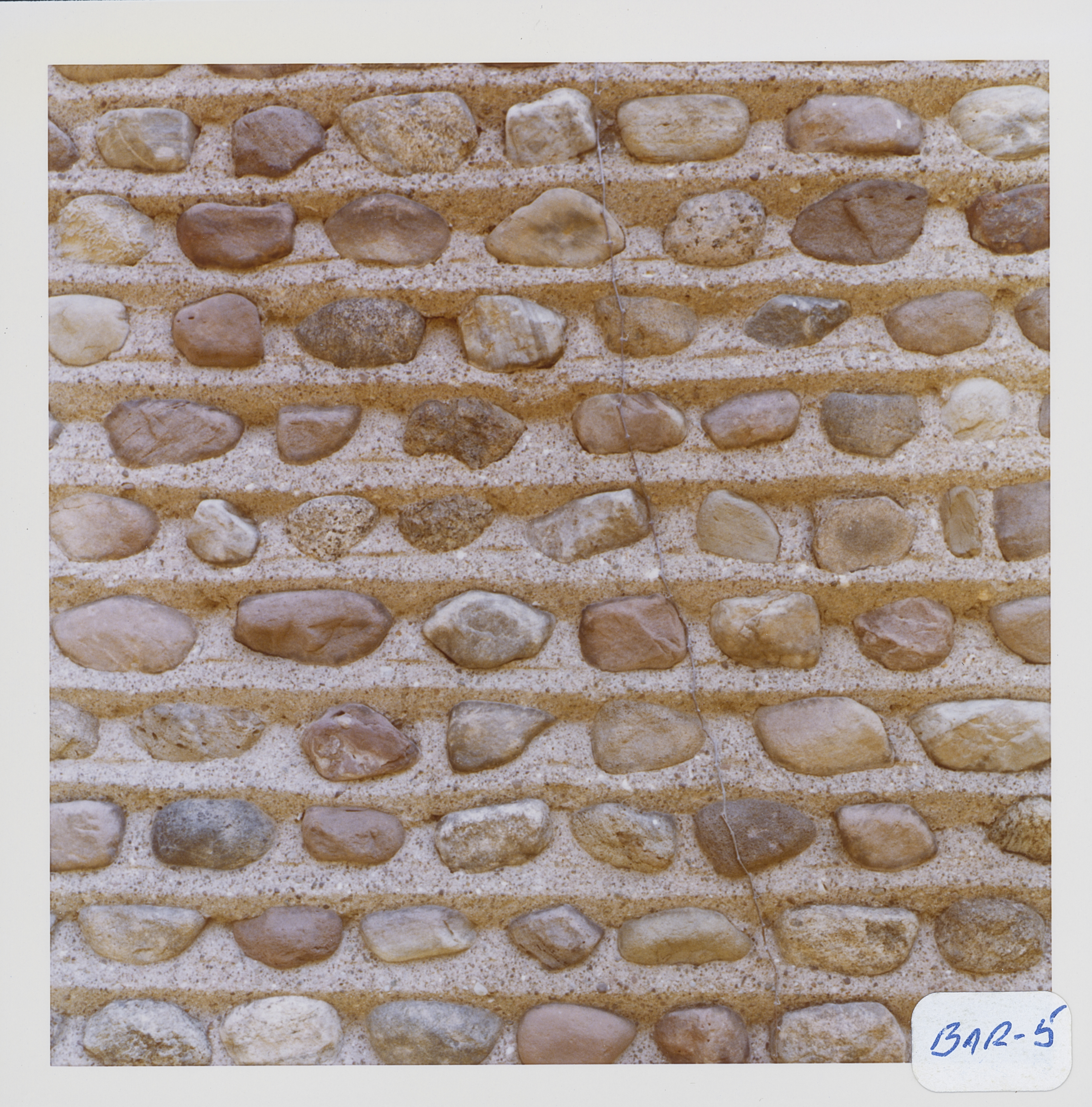
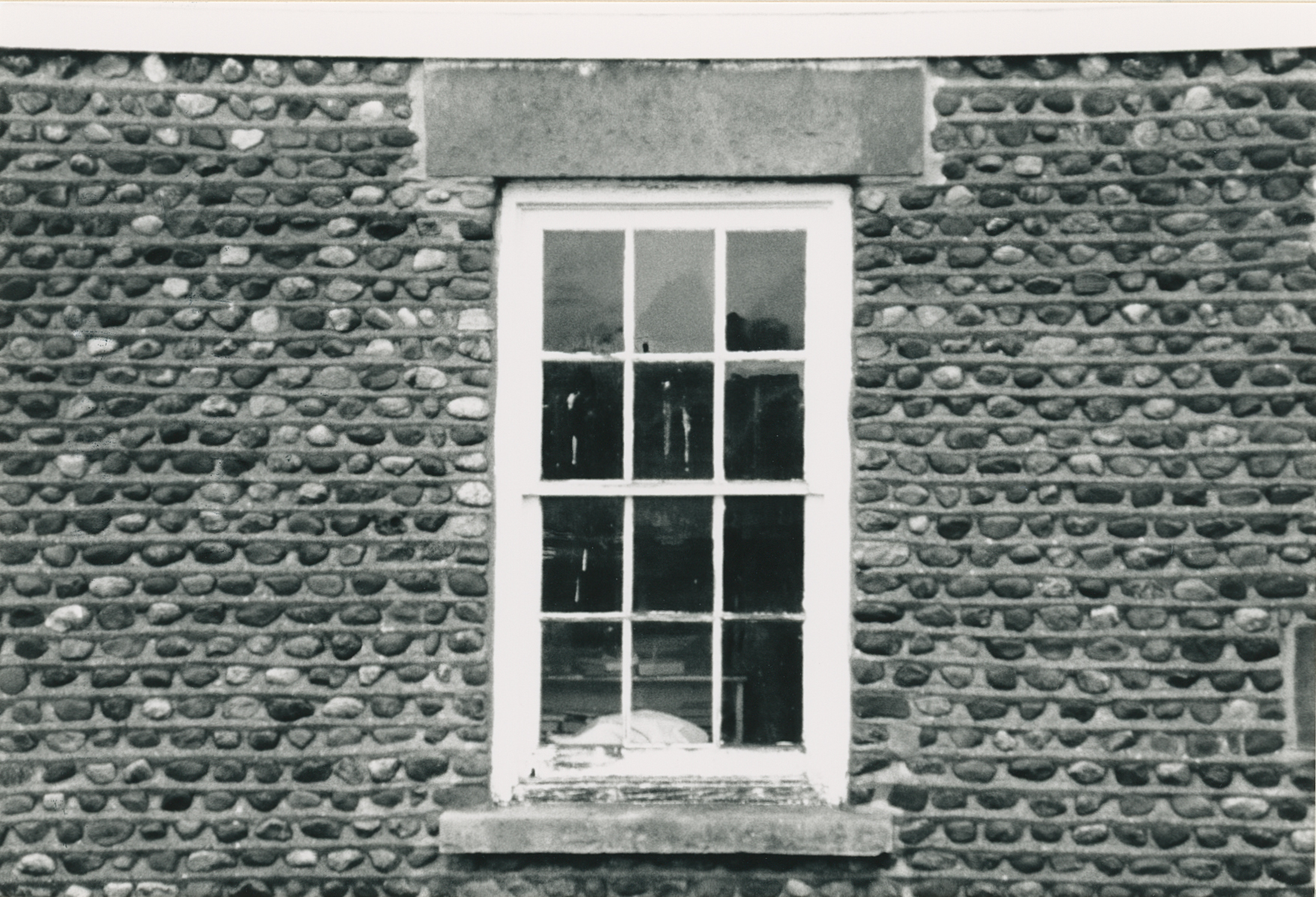
Mortar application and content: Vertical, slight embellishment. Vertical pyramids
Types and uses of stones:
Types and choice of windows: Lintels red stone solid
Structures with similar masonry details: LeR-1 Baron-Brown, Bar-1 Ernst, Gai-14 Stinson, Gai-25 School 5, She-3 Boyle
Masons who worked on building:
Unique features:
Map views courtesy Google Maps. Address is Google Earth confirmed; 43°10'55.42"N 78°16'06.83"W. Current owner of record, Nesbitt as of the 2019 Tax Roll.
Town of Barre and Ontario County Maps
The Roudabush Survey states the street number as 4741 as of mid 1977. Since then the property has been appended to the adjoining property to the west with the street number 4764, and is not inhabited, currently without a postal address for the structure itself.
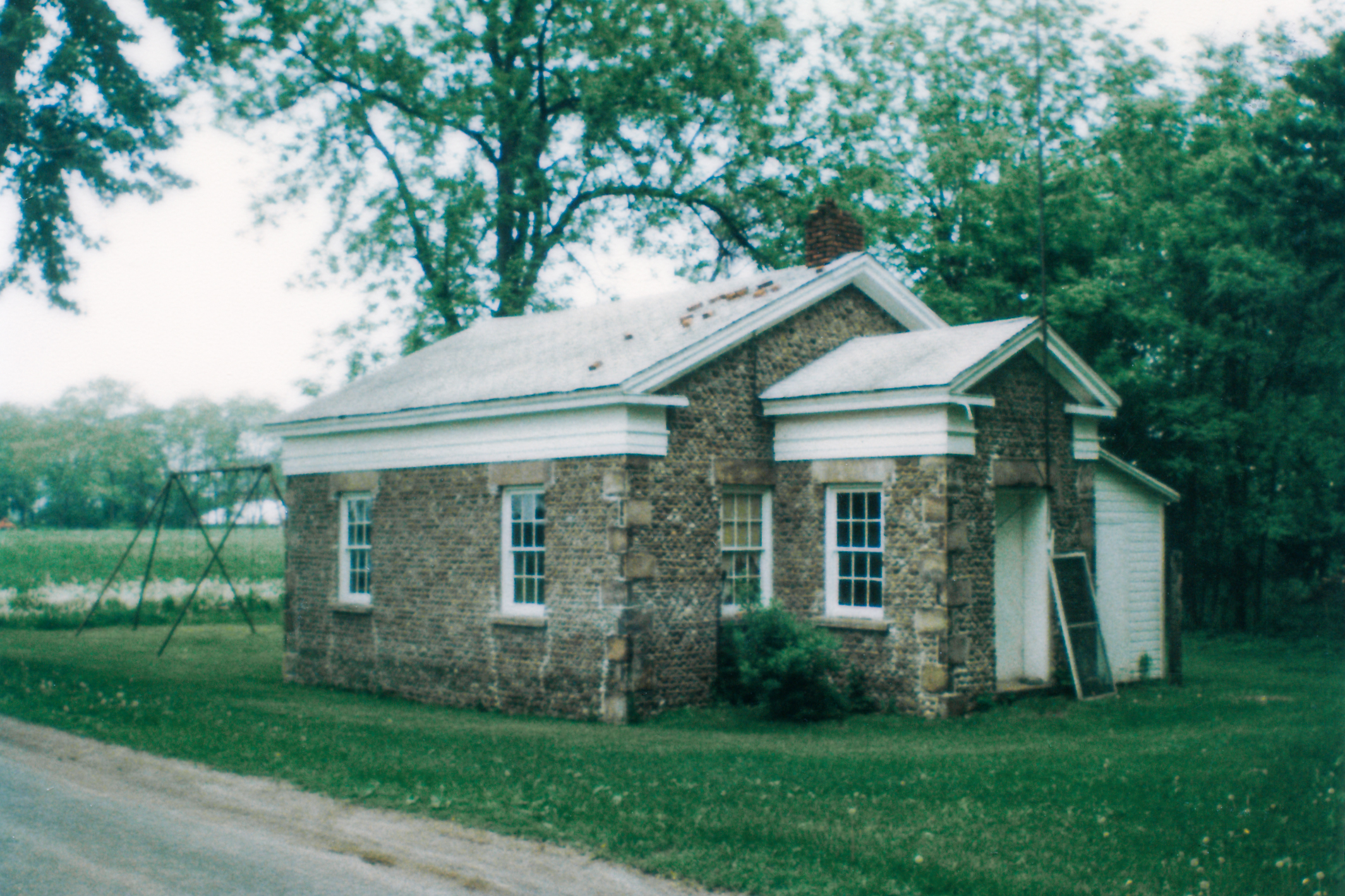
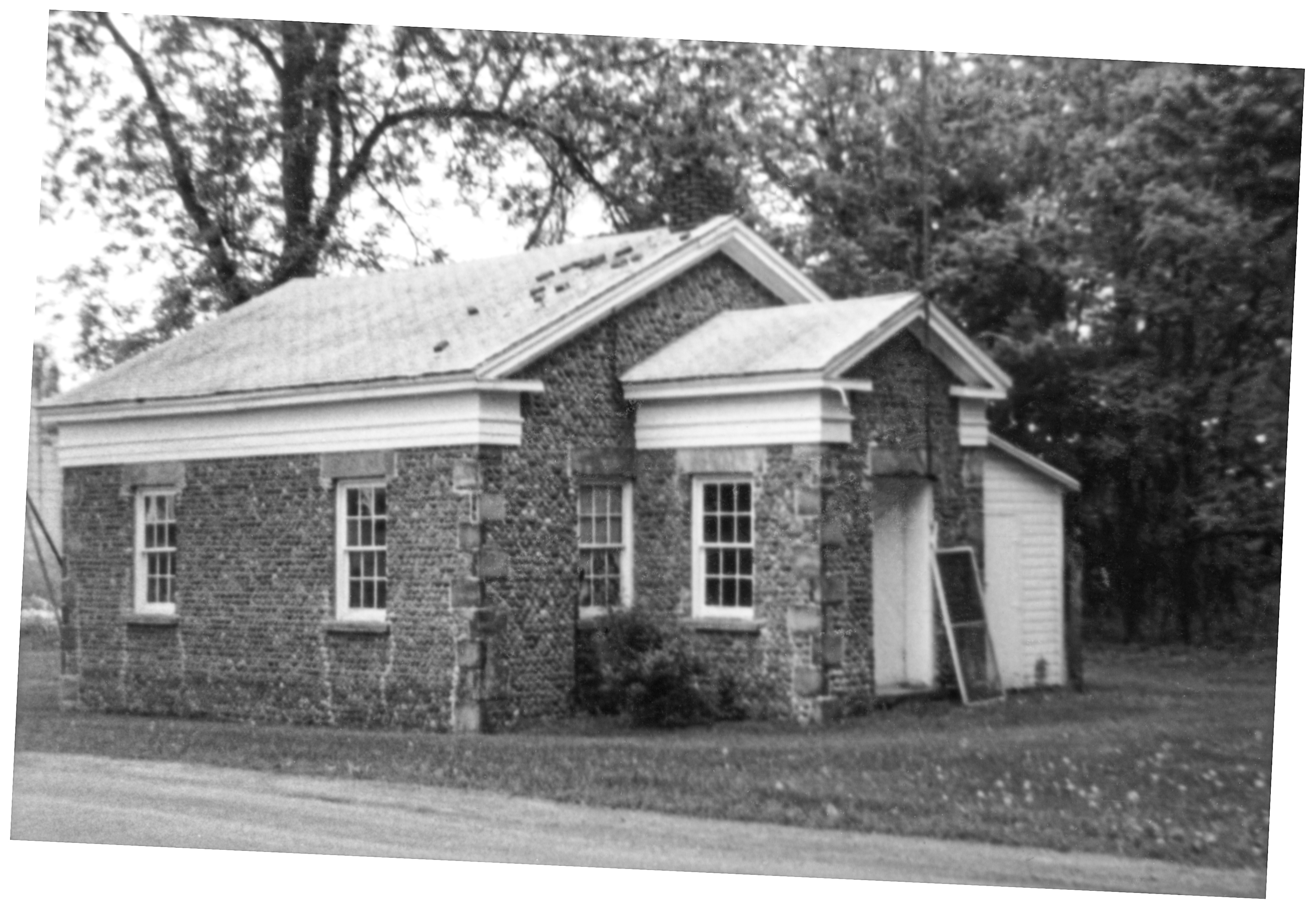
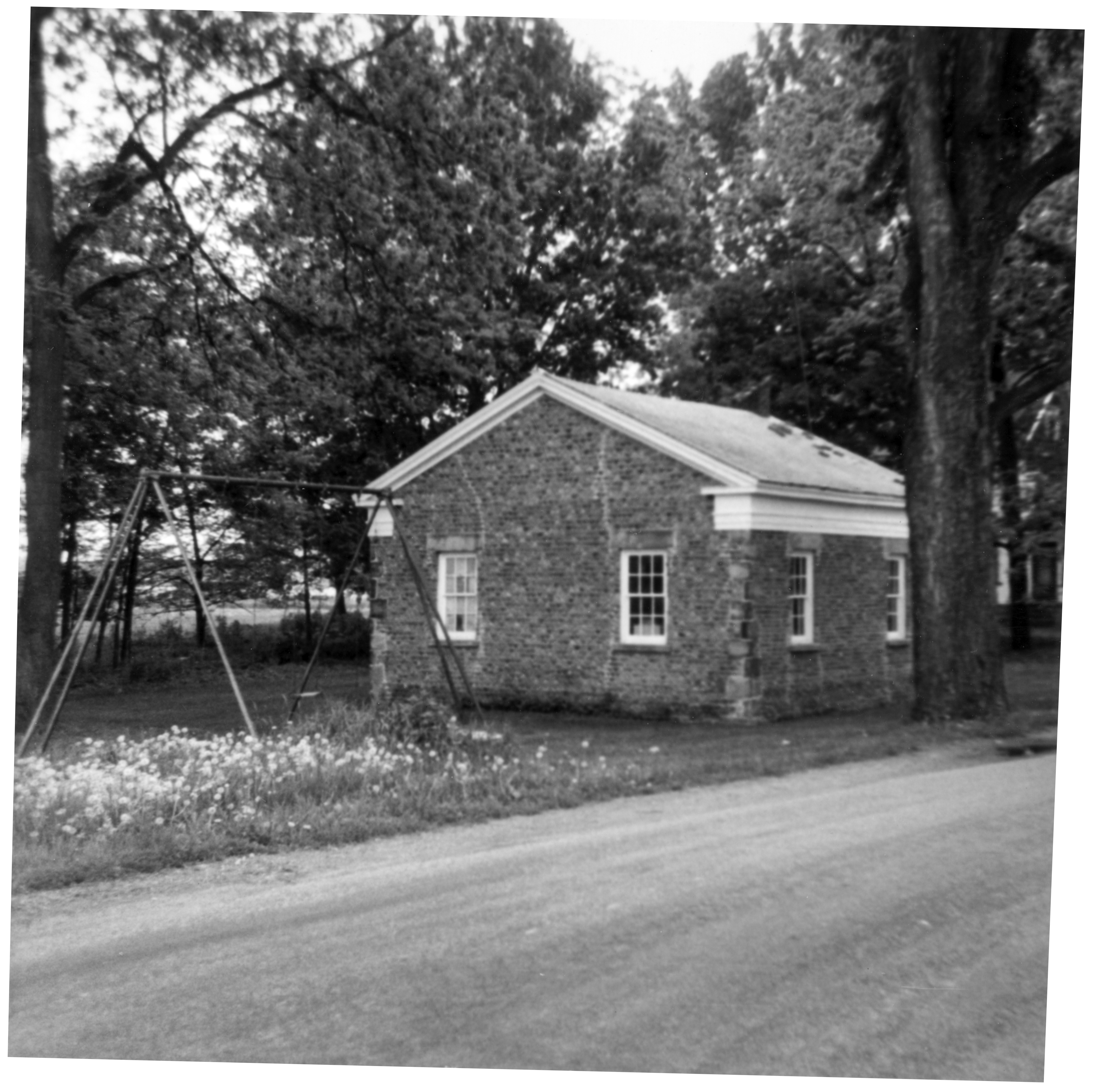
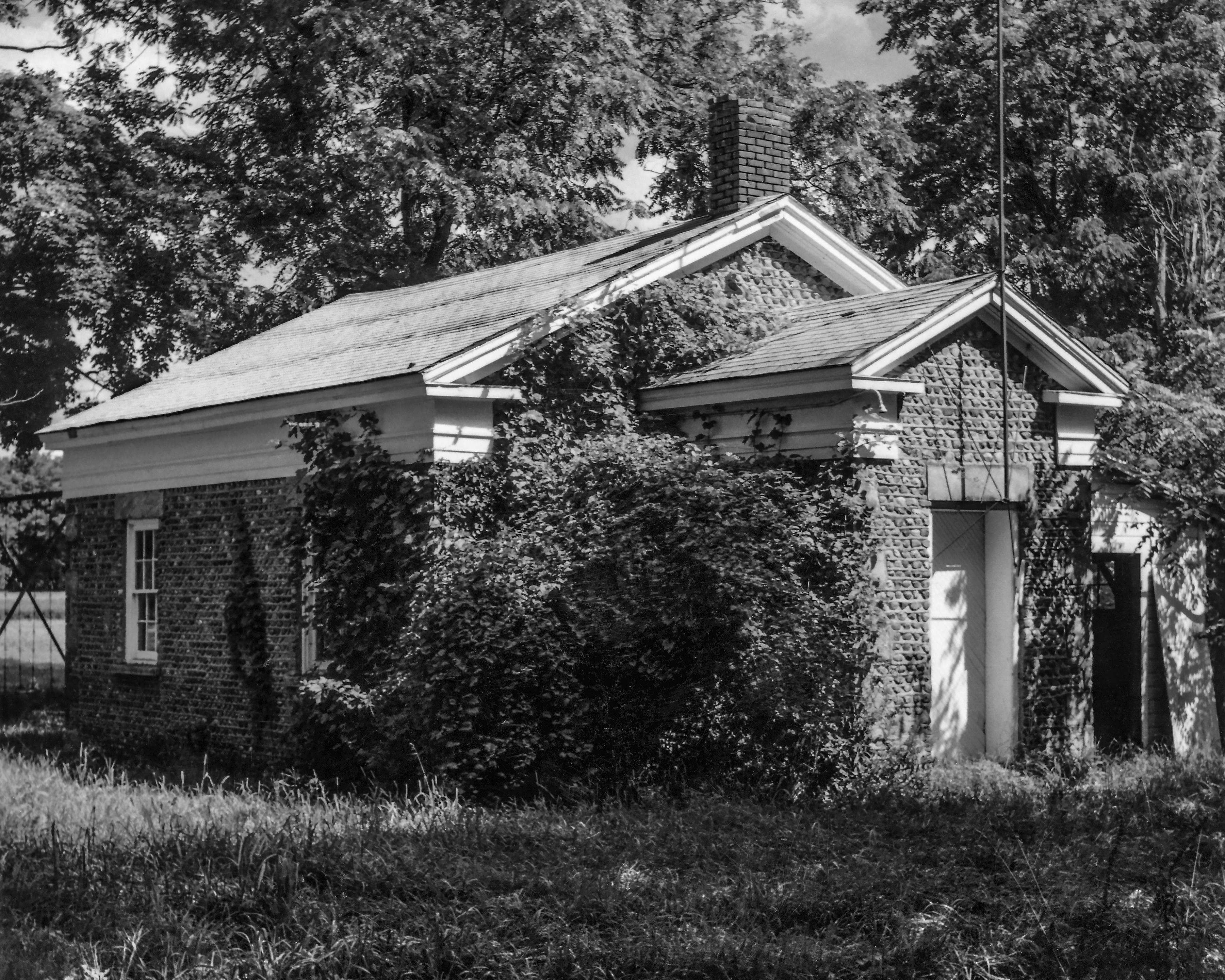
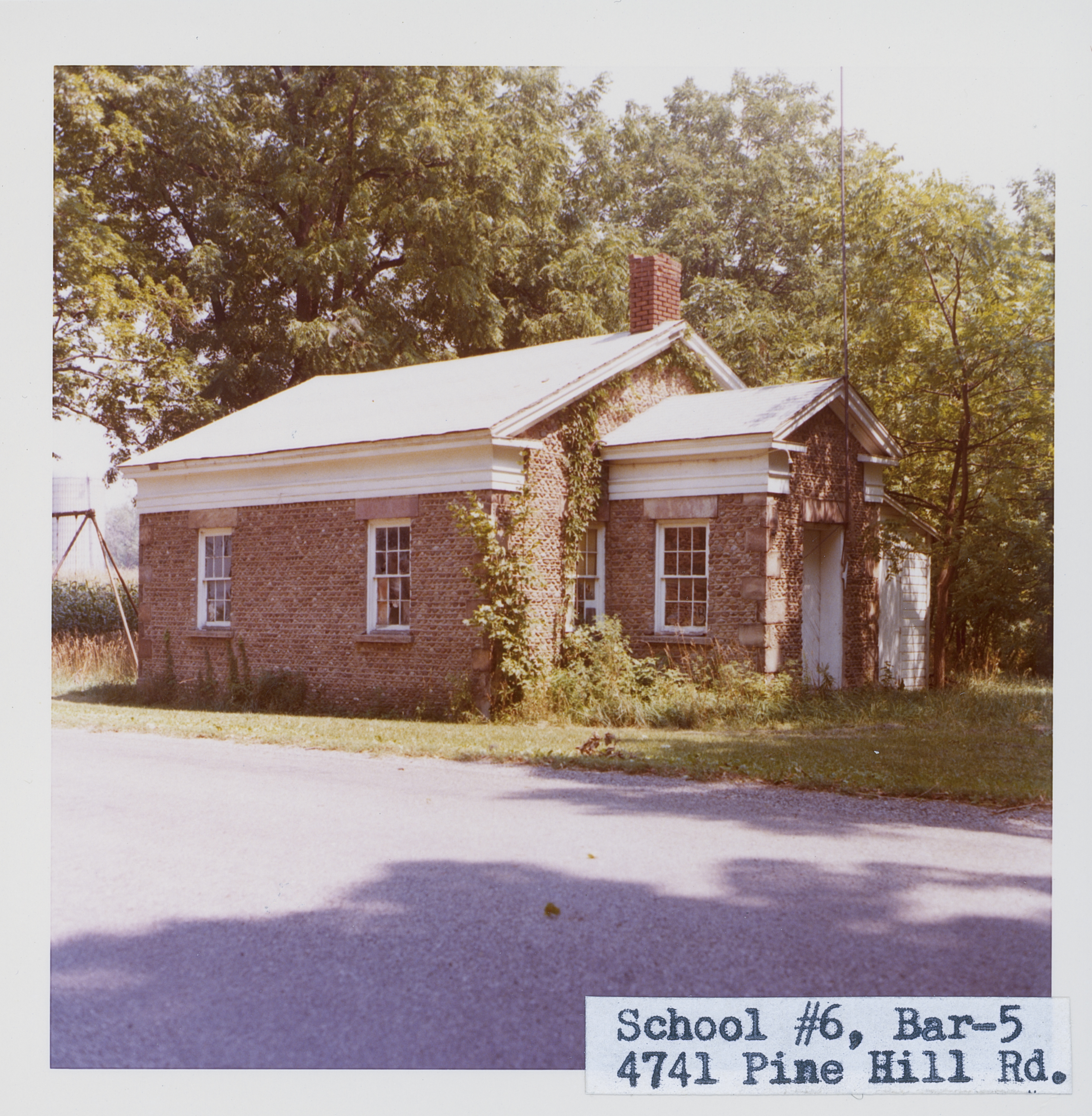
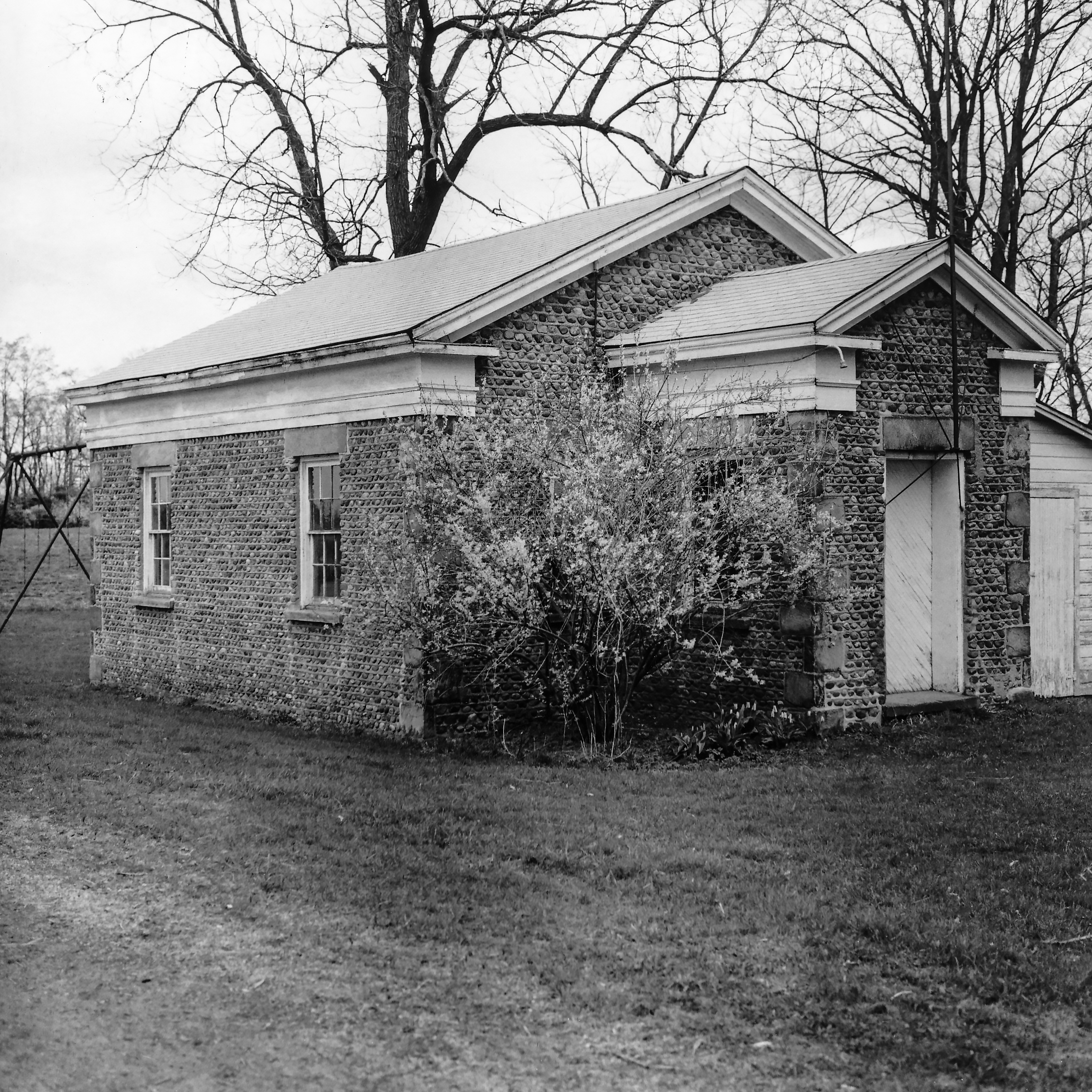
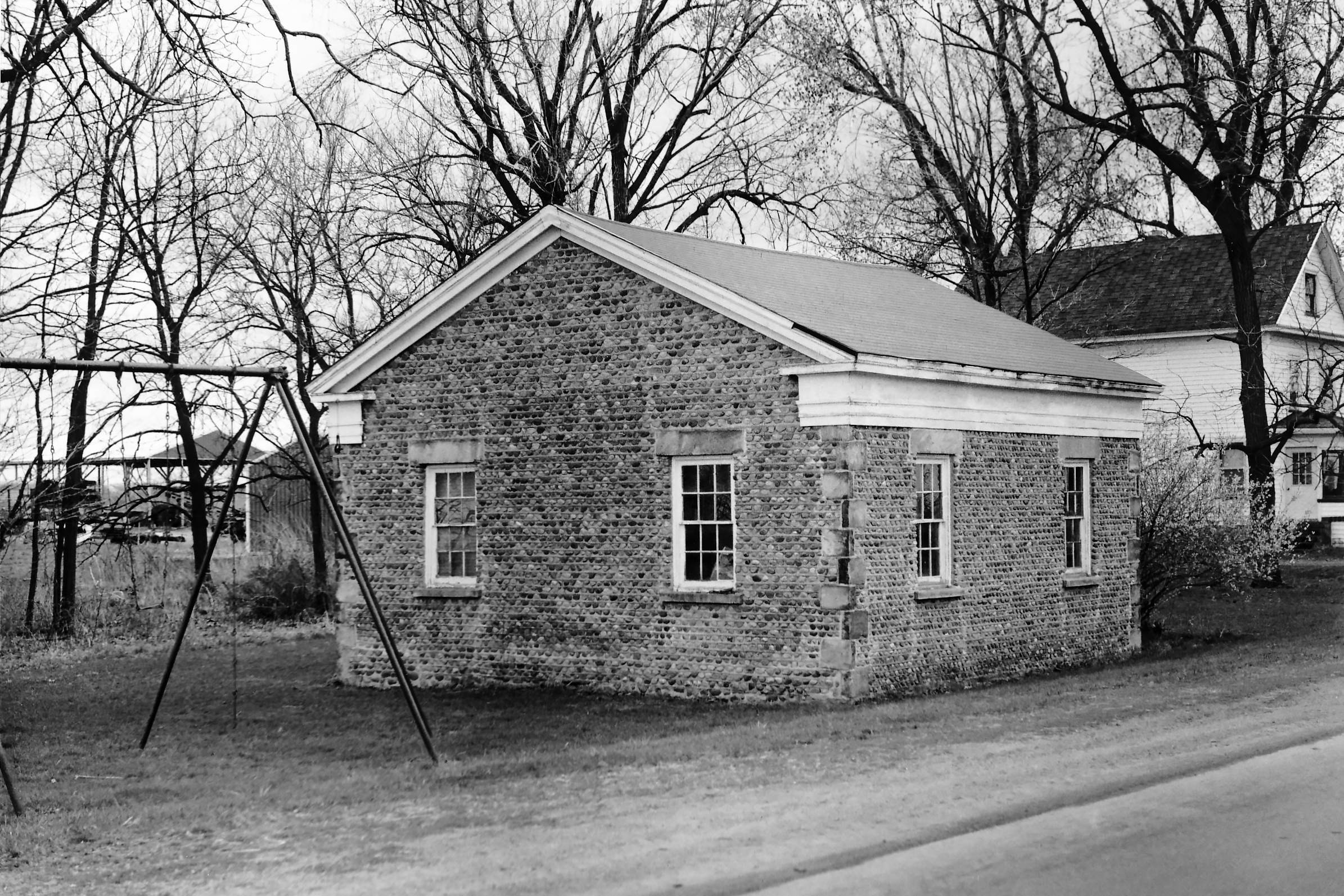
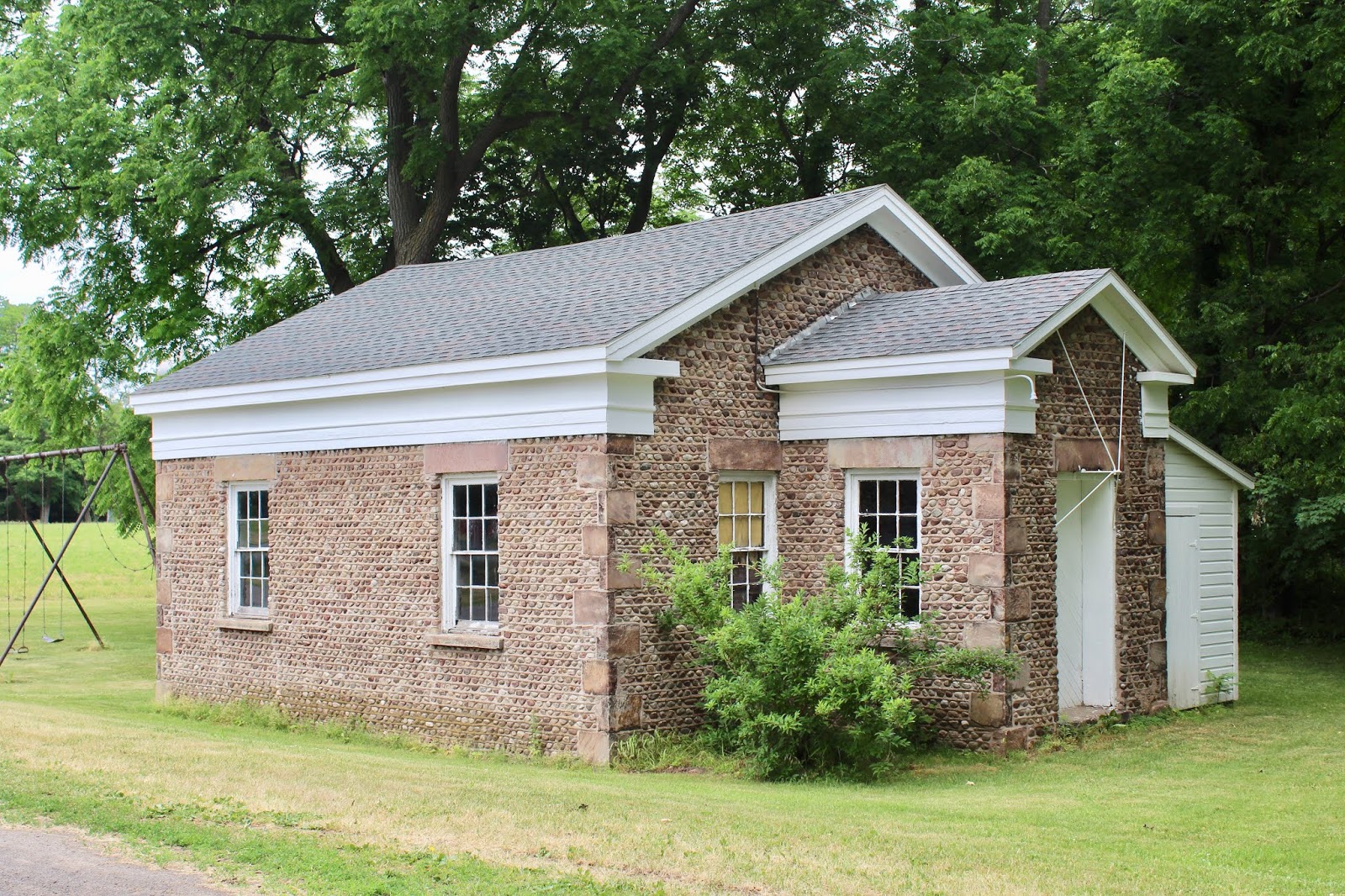
District School house No. 6 at 4757 Pine Hill Road, Barre, Orleans county, was built about 1830 of fieldstone cobbles and is remarkably well intact. Students attended classes in the winters. It was heated by a wood stove. It's one of the few such buildings with a cobblestone entry way. For years after it was closed it was cared for by Calvin Nesbitt who lived nearby and attended school there as a boy. Richard Palmer blog.
"Cobblestone Buildings of Orleans County, N. Y.", A Local History, page 13, by Delia Robinson, Edited by Evelyn Lyman and William Nestle. Jointly published by The Cobblestone Society and The Orleans County Historical Association, December 1996.
Steven & Paula Nesbitt, Pine Hill School, Barre
Receives Historic Preservation Award *
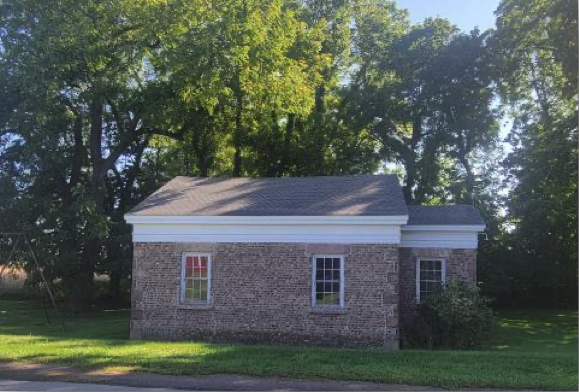
This small, one-room cobblestone school was built circa 1835, of fieldstones with V'd mortar joints. Unique to this building, thin stones were used as fillers under alternate quoins which were cut of sandstone, as were the lintels and sills. Extra windows were added to the east side and the ceiling lowered in the 1920s. The school served area children for over 100 years, closing in the 1950s due to centralization.
The original blackboards in district schools were actually boards painted black. In R.R. Moore's book, "3,000 Useful Things Everyone Needs to Know" (1884), is found the formula used to make these boards black. "Paint for Black Boards in Schools. Common glue, 4 oz.; flour of emery, 3 oz.; just enough lampblack to give an inky color. Dissolve the glue in 3/4 quart water, put in the lampblack and emery, stir until there are no lumps. Apply to the board with a woolen rag, smoothly rolled. Three coats are sufficient."
This early cobblestone structure was nominated for this award by C.W. "Bill" Lattin, retired county historian. The current owners have done a great job maintaining the structure using period appropriate materials in keeping with the original character of the building. Steve spent countless hours completely restoring the flooring and other structural components.
The Cobblestoner, Fall 2023 Vol. 46 No. 4, page 6, Newsletter of the Cobblestone Museum.
* The Cobblestone Society & Museum was pleased to present six awards to local business and property owners who have demonstrated outstanding attention to restoring, preserving and maintaining the historic nature of their architecture. Selection of the winners was aided through a public nomination process for several months. The awards were presented at a banquet held at Maison Albion on October 20th, who was one of several sponsors who made the evening very enjoyable.
The Cobblestone Society & Museum Tours:
Pine Hill District # 6 Schoolhouse, Tour of Cobblestone Homes 09/30/2017
Editor's Note: Street number stated as 4757.
- "Cobblestone Masonry", 1966, Carl Schmidt: Name reference, Pinehill Schoolhouse District No. 6
- Page 118
- "The Era of Cobblestone Architecture", unpublished manuscript 1972. To access the manuscript content about this structure, see 115. Orleans County, District 6 School. This structure is not included in the subsequent book "Cobblestone Landmarks of New York State", 1978.
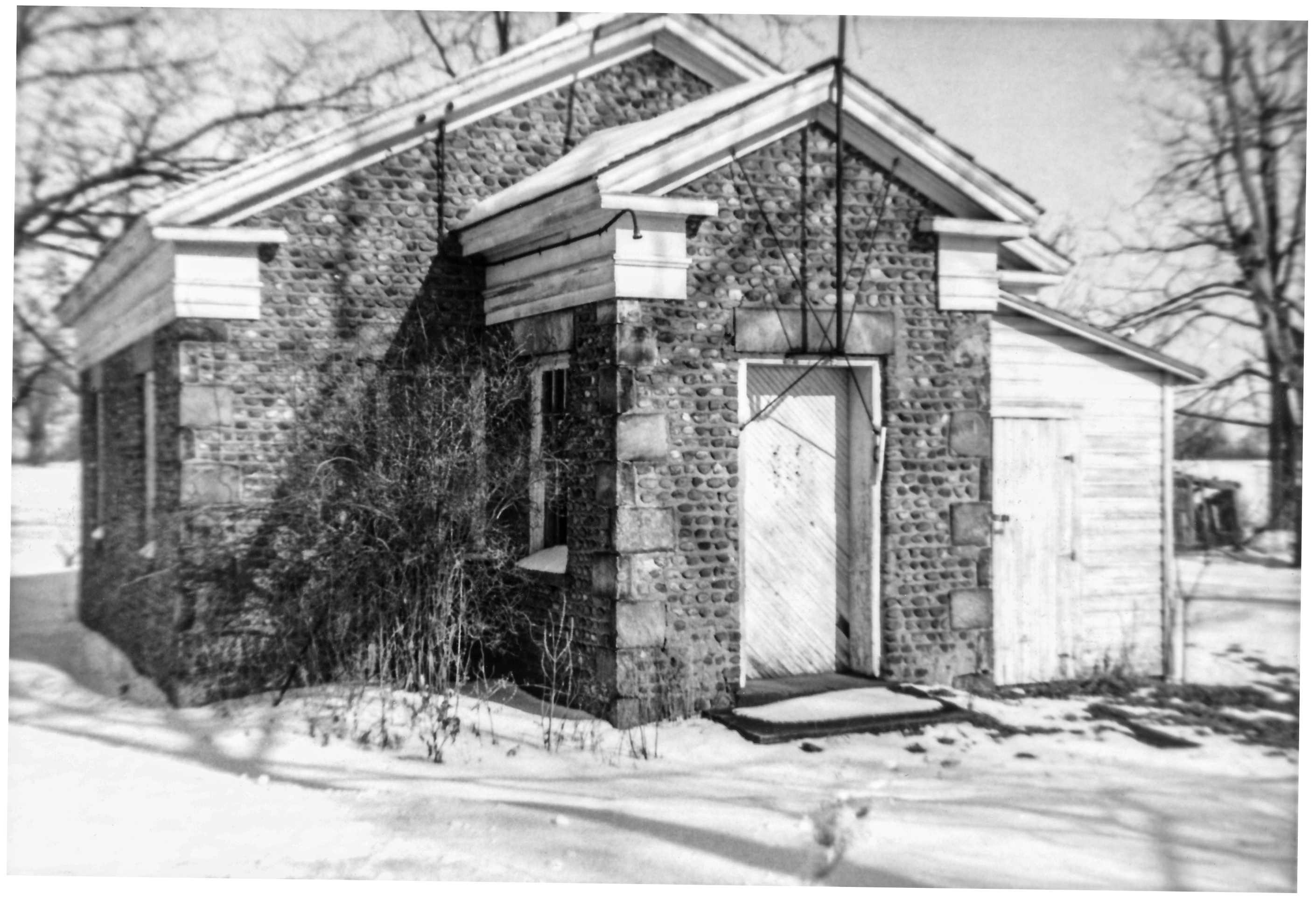
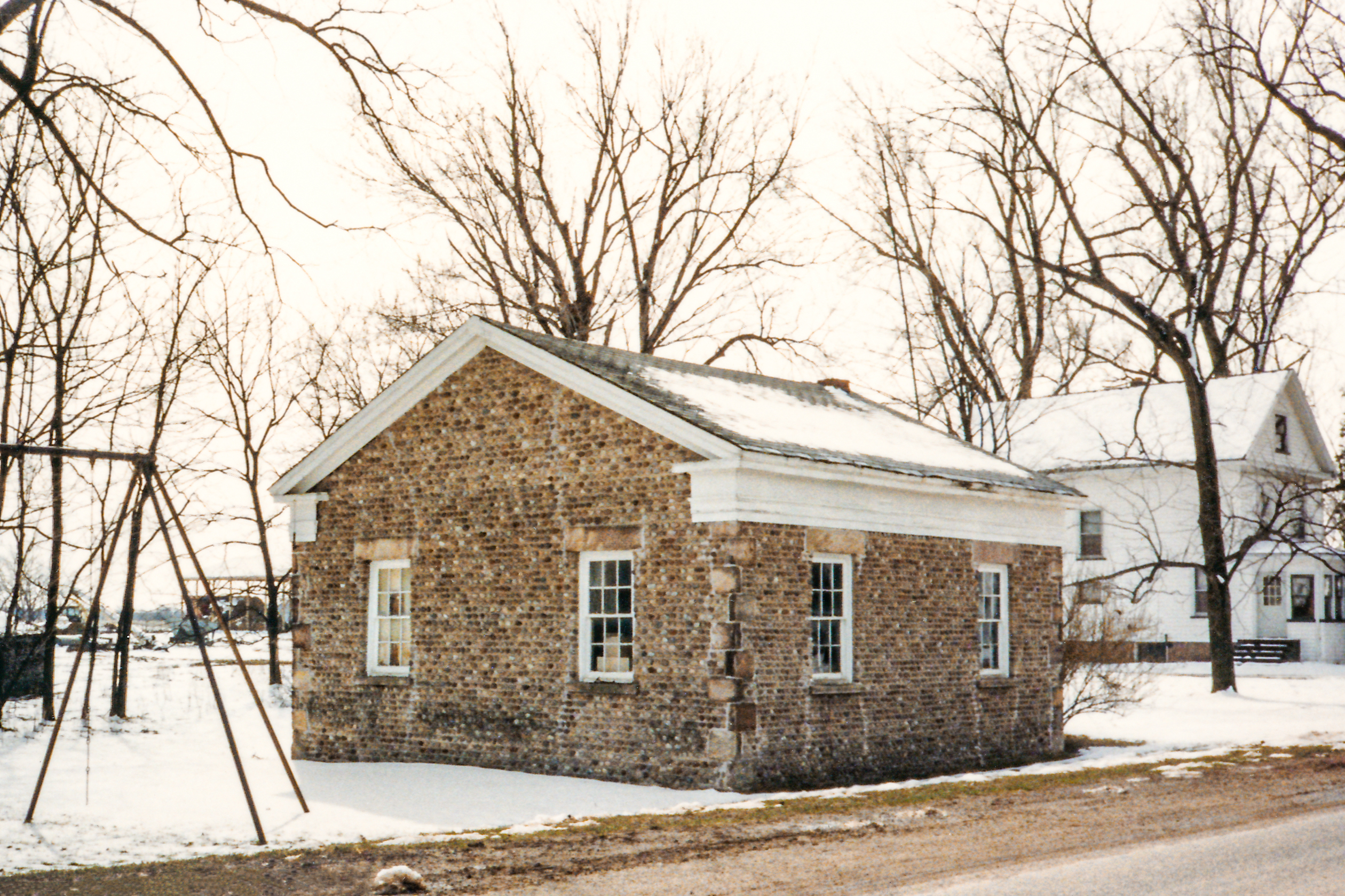
¹ Image courtesy Cobblestone Museum.
² Photography courtesy Gerda Peterich. Cobblestone Museum.
³ Photography courtesy Martin and Sheila Wolfish.
4 Photography courtesy Richard Palmer.
